
Best for PDF
Use PDF when the audience needs a printable, searchable, easy-to-share copy of the deck.
Long-tail PDF workflow
PDF is excellent for sharing a stable slide handout, but it does not run PowerPoint's animation engine. That means entrances, exits, motion paths, timings, audio cues, and trigger-based effects usually become static once the deck is converted.
The practical solution is to decide what the PDF needs to preserve: the final slide only, every build step as separate pages, speaker handouts, or a video-like version of the presentation. Once that choice is clear, conversion becomes much more predictable.
This guide explains the safe workflow for class slides, client decks, and presentation handouts, then links directly to the PowerPoint to PDF tool when you are ready to create the PDF copy.
Important limitation
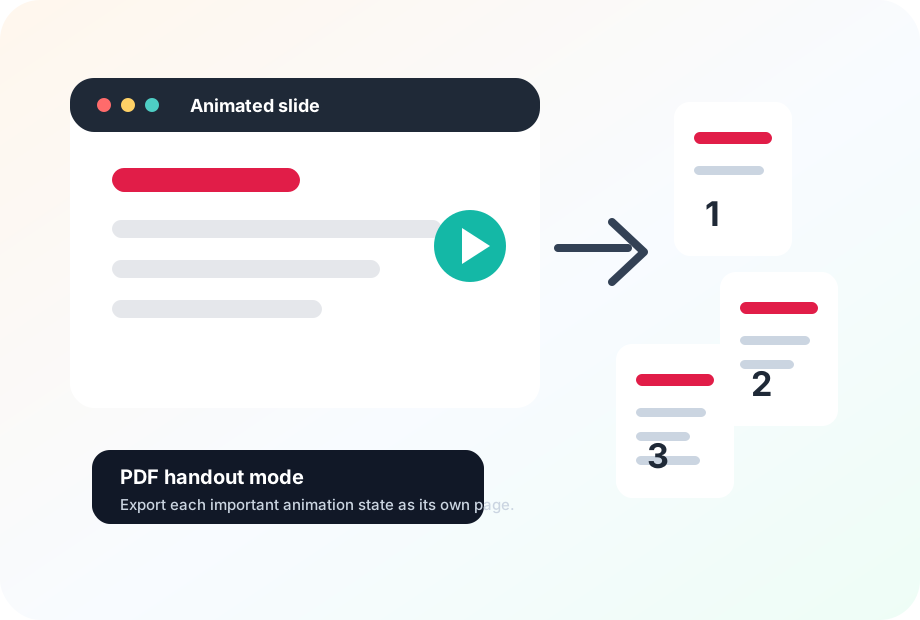
When PowerPoint exports to PDF, each slide is flattened into page content. The PDF can keep text, images, shapes, speaker-friendly layout, and slide order, but it does not preserve the PowerPoint animation timeline as interactive motion.
For most handouts, that is fine. For a slide where bullet points appear one by one, duplicate the slide several times and reveal one additional bullet on each duplicate. The resulting PDF will show the build sequence page by page, which is readable for students, reviewers, and clients.
Use PDF when the audience needs a printable, searchable, easy-to-share copy of the deck.
Use video when exact timing, audio, transitions, or motion paths need to play automatically.
Share the original PPTX when the recipient needs to edit slides or present with live animations.
Recommended workflow
Find slides that depend on builds, reveal effects, motion paths, audio, or timed transitions. Decide whether the final state is enough or each step needs a separate PDF page.
For important reveal animations, duplicate the slide and manually show the next item on each copy. This creates a clean page-by-page reading order after conversion.
Convert the deck to PDF, then check slide order, text readability, charts, speaker notes, and any slide that originally had animation.
Why it matters
Most PDF jobs are simple until the destination has a rule: a size limit, a required format, one file instead of many, readable text, or pages in the correct order. A focused browser workflow keeps the job small. Open the right tool, work from the original file, download the output, and inspect it before using it anywhere important.
For PowerPoint to PDF without losing animations, the main goal is to turn a PowerPoint deck into a shareable PDF copy while checking how animated slides will appear without adding extra steps. CloudPDF keeps the related tool close so you can read the guidance, then start the actual file work on the matching workspace page.
Step by step
Use the original PDF, document, image, or scan when you can. A cleaner source usually gives a cleaner result, especially for conversion, compression, splitting, and page edits.
The related tool is built for this job, so you do not have to search through a large editor. Choose the file, review the available settings, and process it in the browser workspace.
Open the downloaded file and look at page order, formatting, file size, readability, and any private information. This last check is the difference between a quick fix and a second round of rework.
Use cases
These are common moments where a focused PowerPoint to PDF workflow is faster than opening a full desktop editor or starting the document from scratch.
This workflow helps when you need a file that is easier to review, submit, share, or keep organized without changing the original more than necessary.
This workflow helps when you need a file that is easier to review, submit, share, or keep organized without changing the original more than necessary.
This workflow helps when you need a file that is easier to review, submit, share, or keep organized without changing the original more than necessary.
Do the file work
The guide gives you the checklist; the tool page is where the actual upload, processing, and download happen. Your source file stays selected only for the browser session.
Before you finish
Before submitting the final file, scan the first page, the last page, and any page with a table, signature, image, or form field. If the destination has a size limit or format requirement, confirm that too. For sensitive files, make sure the output does not reveal information you meant to remove.
FAQ
A standard PDF cannot play PowerPoint animation timelines. The reliable workaround is to export each animation step as a separate slide or page, or share a video when movement must remain playable.
Duplicate the slide for each build step, reveal one additional element per duplicate slide, then convert the deck to PDF so each animation state becomes its own PDF page.
Use PDF for printable handouts, email attachments, LMS uploads, and review copies. Use video or PowerPoint when timing, motion paths, audio, or automatic playback matter.